
Enfamil lawsuits* (Enfamil Lawsuits only pertain to Specialized PREMATURE and LBW Nutrition Products only available in liquid form and NOT Mead Johnson’s full-term, standard birth weight Enfamil formula and fortifiers) are causes of action against Mead Johnson Nutrition. These baby formula lawsuits allege that consumers were not properly warned that the Enfamil Specialized PREMATURE and LBW Nutrition Products baby formula can result in preterm infants diagnosed with necrotizing enterocolitis (NEC). This severe gastrointestinal sickness could cause permanent complications and could result in death. The Specialized Enfamil PREMATURE and LBW Nutrition Products baby formula has become linked to cronobacter, salmonella, and meningitis injuries. The following products were also contaminated:
- Similac,
- Alimentum and
- EleCare baby formula (2022 recall)
- Enfamil Specialized PREMATURE and LBW Nutrition Products baby formula
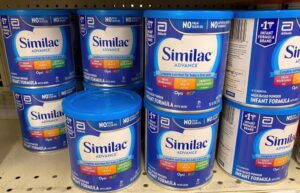
Contact us to pursue a possibly lucrative settlement with a high powered law firm on your side. Similac lawsuits have been pursued against the manufacturer, Abbott Laboratories, across the United States asserting that Similac cow-milk- formula for babies has resulted in numerous preemies developing gastrointestinal infection known as necrotizing enterocolitis (NEC). Parents are sold baby formula from practically the first moment they seek out prenatal care. The baby formula companies make a fortune on these products, and they want parents hooked on using them. They sell the idea of an easy way to feed the baby, so the parents can be less stressed. In the process, they make hundreds of millions of dollars each year. However, these products are not always safe. Premature infants have been injured by a bacterial infection called necrotizing enterocolitis (NEC). This happens far more often when they are fed cow’s milk-based formulas. As a result, the makers of Similac and Specialized PREMATURE and LBW Nutrition Products Enfamil are facing product liability lawsuits from parents of injured babies. If you need a top lawyer to file a similic lawsuit or a high powered attorney for a baby formula NEC Enfamil lawsuit, contact us.
- Meade Johnson’s corporate counsel sent me a letter requesting that I make the following information clear and Slepkow Law issues a correction. Per Meade Johnson’s corporate counsel “Although Mead Johnson denies all allegations related to the NEC Litigation, plaintiffs in said litigation allege that Specialized PREMATURE and LBW Nutrition Products only available in liquid form cause necrotizing enterocolitis. Thus, the NEC Litigation is strictly limited to Specialized PREMATURE and LBW Nutrition Products, not Mead Johnson’s full-term, standard birth weight Enfamil formula and fortifiers (“Full-Term and SBW Enfamil Nutrition Products”). There have been no allegations, claims or evidence of any kind in the NEC Litigation that have included or relate to Full-Term and SBW Enfamil Nutrition Products.”
HOW NEC PUTS A BABY’S LIFE IN DANGER
NEC is a very serious and potentially deadly condition. A premature baby’s digestive system is vulnerable and immature. When the baby develops an infection, they could suffer permanent damage. With NEC, the infection can permanently kill parts of the intestine. This makes a hole, and fluid can seep into the abdominal cavity. Losing a large part of the intestine can impact the baby for the rest of their life, if they even survive NEC at all. Up to 30% of babies who develop NEC will die from the condition.
In general, one in every 1,000 premature babies will develop NEC, but the rate is far higher among babies who received cow-milk formula. The Cleveland Clinic has defined necrotizing enterocolitis (NEC) as a “serious gastrointestinal problem that mostly affects premature babies. The condition inflames intestinal tissue, causing it to die.” The problem involves holes forming in a preemie child’s intestine. This could allow bacteria to possibly leak into the intestinal wall or perhaps the intestinal tract and the bacteria could enter the abdomen or bloodstream. NEC may cause to serious medical problems and lead preterm infants to require neonatal intensive care that can be life threatening. The Centers for Disease Control and Prevention (CDC) has determined that NEC is the 10th highest cause of fatality for preemie infants below 12 months.
COMMON SYMPTOMS OF NEC
NEC can cause the following symptoms in babies:
- Constipation
- Trouble gaining weight
- Distended abdomen
- Intense pain
- Discolored vomit
Specialized PREMATURE and LBW Nutrition Products ENFAMIL LAWSUITS*
If the infection progresses, the baby will develop symptoms consistent with an advanced infection. These could include:
- High fever
- Lethargy
- Shock
Doctors will often need to perform emergency surgery to remove the dead parts of the intestine. They often need to do multiple procedures. In the meantime, the baby suffers pain and discomfort. If they have lost a large part of their intestine, the pain will persist for the duration of their life.
RESEARCH SHOWS THAT BABIES FED COW-MILK FORMULA HAVE A MUCH HIGHER RISK OF NEC
For years, research has shown that cow-milk based formula can harm premature infants. Some of this data goes as far back as the early 1990s. About a decade ago, there were several more studies that confirmed what the early data showed. Research has documented that premature babies who have been fed cow-milk baby formula are three to seven times more likely to develop NEC.
As a result, the American Academy of Pediatrics issued a 2012 recommendation to doctors to only give human milk to premature infants. This could include:
- The mother’s milk
- The mother’s milk with fortifiers
- Human donor milk
Even with this warning and guidance, the makers of products like Similac and Enfamil failed to do anything in the face of mounting evidence that their products were dangerous. Initially, parents sued the doctors who gave these products to the babies. Parents won several major medical malpractice verdicts against physicians and hospitals when babies were seriously injured or died from NEC.
GROUNDS IN ENFAMIL AND SIMILAC PRODUCT LIABILITY CASES
Now, parents have begun to file product liability lawsuits against the makers of these infant formula products. There are two major allegations in these complaints. They are:
- These companies have long known about the dangers of cow-milk based formulas to infant children, and they did not warn doctors or parents about the potential risks. This is a marketing defect.
- There was a reasonable and safer alternative to use human milk in formulas marketed towards premature infants instead of cow-based ingredients. This is a design defect.
THE NUMBER OF BABY FORMULA NEC LAWSUITS WILL GROW
Parents have recently begun to file these lawsuits. Given the number of premature babies who have been given Similac and Enfamil, we expect the amount of these cases to grow. Right now, these cases are in their very early stages. At some point, we expect a motion to consolidate these cases into multidistrict litigation.
There are two major companies that are defendants in these lawsuits. They are:
- Mead Johnson – the maker of Enfamil
- Abbott Laboratories – the maker of Similac
These two companies each control approximately 40% of the baby formula market. Any baby formula maker who sold a defective product can be made to pay. Despite the dangers of these cow-milk based products, they are still on the market and have not been recalled.
WHAT FAMILIES CAN RECOVER IN A BABY FORMULA LAWSUIT
These are the potential damages that parents could get as part of an Enfamil (Specialized PREMATURE and LBW Nutrition Products) or Similac lawsuit:
- Medical bills for past and future treatment
- Pain and suffering (these damages can be considerable – in one of the medical malpractice lawsuits, the plaintiff was awarded $5 million for pain and suffering)
- Emotional distress
- Lost wages if the child is not able to work in the future, or if the parents have to miss work to care for their child
- Wrongful death damages if their child died from NEC
It is too soon to know how much these cases are worth. However, if the medical malpractice cases against doctors who gave babies this formula are any guide, we think that these cases could be valued at up to $1 million in a settlement, and even more if the case goes to a jury. Large multinational companies are not very sympathetic to a jury, especially when their product has seriously injured a baby.
Necrotizing enterocolitis (NEC) is rare in full-term infants, occurring in roughly 1 out of every 2,000 live births in the United States. In premature babies, however, the picture is far more alarming. NEC affects approximately 10 percent of all infants born before 37 weeks, making it one of the most dangerous complications seen in neonatal intensive care units.
While the precise causes of NEC are still being studied, the medical literature is unambiguous on one point: cow’s milk-based infant formulas — including Similac and Enfamil — significantly increase the risk of NEC in premature infants. That conclusion is supported by decades of peer-reviewed research and clinical data.
The risks to premature infants have long been recognized. The American Academy of Pediatrics has recommended human breast milk as the safest feeding option for preterm babies for years. Every NEC baby formula lawsuit centers on a fundamental question: if the science was clear, why did companies like Abbott and Mead Johnson continue to market these formulas for premature infants without adequate warning?
The Science: Key Studies
The Lancet, 1990
One of the earliest and most influential studies on this issue was published in The Lancet by Dr. Alan Lucas and colleagues. The multicenter trial enrolled more than 500 preterm infants with birth weights under 1,850 grams and randomly assigned them to receive either human breast milk or standard bovine-based infant formula.
The results were striking. Infants fed exclusively on formula were six to ten times more likely to develop NEC than those receiving human milk. Researchers attributed the protective effect of human milk to its unique components — immunoglobulins, growth factors, and anti-inflammatory agents — none of which are present in bovine formula. This was among the first studies to establish a strong link between cow’s milk-based formula and elevated NEC risk in preterm infants.
Journal of Pediatrics, 1999
Roughly a decade later, Dr. Richard Schanler and colleagues reinforced these findings in a study published in the Journal of Pediatrics. Focusing on extremely low birth weight infants, the researchers compared outcomes for babies fed human breast milk (supplemented with human milk fortifiers) against those fed preterm bovine-based formula.
Infants receiving breast milk or human milk fortifiers were 90 percent less likely to develop NEC than those fed conventional bovine formula — a significant finding that highlighted not only the value of breast milk, but also the protective role of human milk fortifiers in delivering necessary nutrients without the added risk.
Journal of Pediatrics, 2013
Two additional studies published in 2013 provided further, more definitive evidence. One, appearing in the Journal of Pediatrics, demonstrated that an exclusively human milk-based diet — including human milk-derived fortifiers — significantly reduced the incidence of both NEC and surgical NEC compared to diets that included any bovine-based products. A companion study published the same year found that even substituting bovine-based fortifiers into an otherwise human milk diet increased NEC risk. The message was consistent: bovine milk products, in any form, elevate risk in preterm infants.
Additional Research
The body of evidence has only grown stronger over time:
- A 2010 randomized controlled trial published in the Journal of Pediatrics (Sullivan et al.) enrolled 207 extremely premature infants and found that those fed an exclusively human milk-based diet had 77 percent lower odds of developing NEC, including a statistically significant reduction in surgical NEC (P = .007).
- In 2011, the U.S. Surgeon General published a report finding that premature infants who are not breastfed are 138 percent more likely to develop NEC. This is an official position of the United States government — not a litigation-funded study — and it has been on the record for over a decade while Enfamil and Similac continued to be administered to premature infants in NICUs without adequate warning.
- A 2014 review in Expert Review of Clinical Immunology stated plainly: “Necrotizing enterocolitis (NEC) is a devastating disease of premature infants with significant morbidity and mortality. It is well established that the risk is increased by the administration of infant formula.”
- Studies published in 2016 and 2017 confirmed that extremely premature infants receiving an exclusive human milk diet had significantly lower rates of NEC, mortality, late-onset sepsis, bronchopulmonary dysplasia, and retinopathy of prematurity.
- In 2019, Cochrane — an independent healthcare research organization — released the most comprehensive comparative analysis to date, effectively putting to rest any remaining debate about a causal relationship between cow’s milk-based formula and NEC in premature infants.
- A 2020 meta-analysis in Nutrients drew on all available controlled trial data and found a relative risk of 0.62 favoring human milk over formula — consistent, replicated, and statistically significant across all studies examined.
- A 2025 meta-analysis of more than 4,600 infants, also published in Nutrients, found that exclusive human milk diets were associated with 41 percent lower odds of surgical NEC compared to cow’s milk-containing diets (OR: 0.59; P < 0.001). Even replacing a bovine-derived fortifier with a human milk-derived one — while keeping human milk as the base — reduced surgical NEC odds by 49 percent. Across 35 years of research, the finding has been consistent.
CONTACT AN ENFAMIL AND SIMILAC LAWSUIT ATTORNEY
Given the potential damage awards, there are high stakes with these cases. You should consult with an attorney immediately if your baby has been given cow-milk formula and developed NEC. Your attorney will advise you whether it is best to file a medical malpractice case or a product liability lawsuit against the company that made the formula. What we do know is that the person or company responsible for harming your baby can be held legally accountable and made to pay for your damages. If you are seeking a lawyer for a hair relaxer lawsuit or an ozempic lawsuit, contact us.